
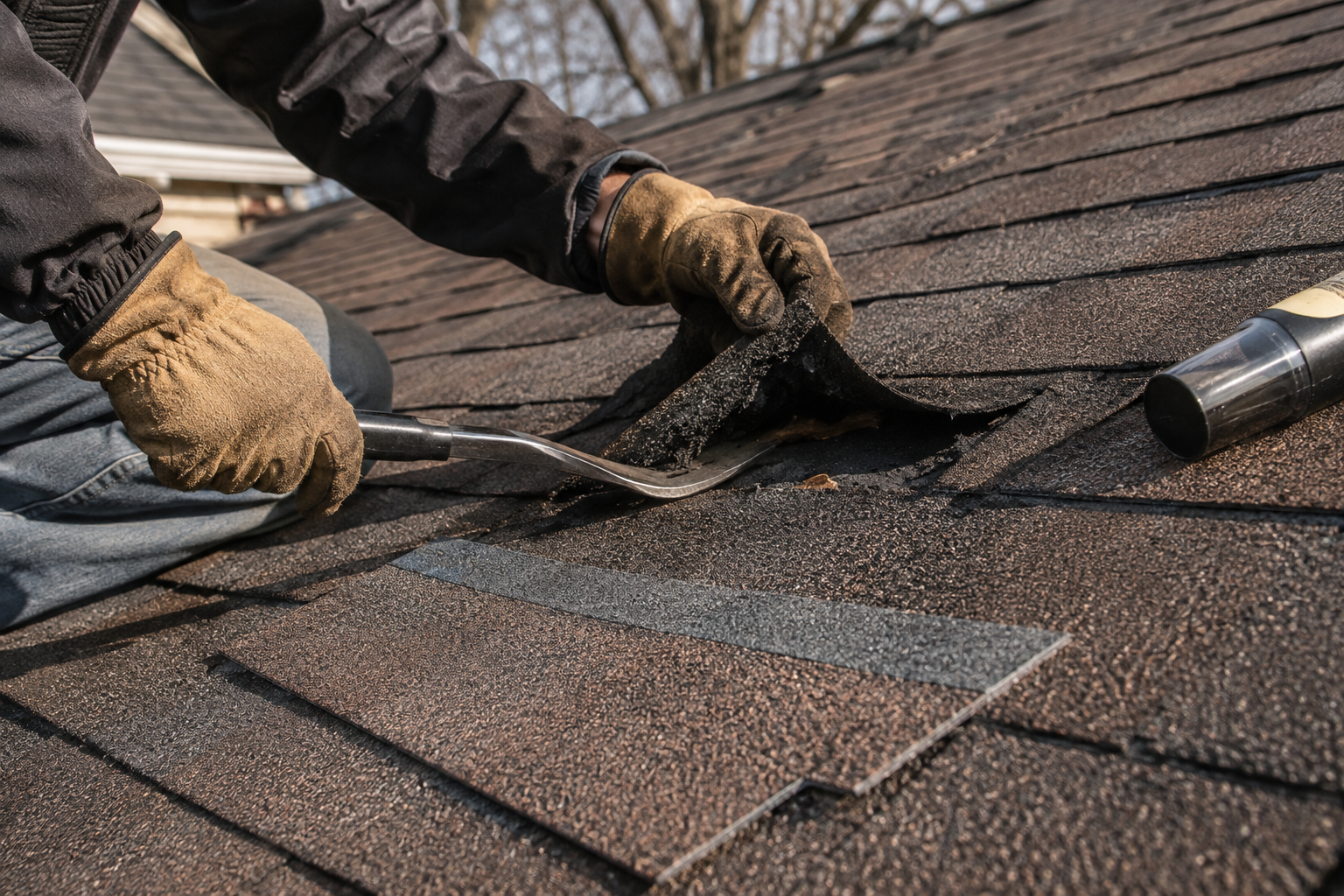
Fixing Roof Shingles: How to Repair Curled, Cracked, and Missing Shingles
Short answer: Fixing roof shingles depends on the damage. A curled shingle can usually be flattened with roofing sealant and weighed down for 24 hours. A cracked shingle can be sealed in place with a bead of roofing cement above and below the crack. A missing or badly broken shingle needs full replacement: lift the shingles above, pull the old nails, slide the new shingle in, nail it, and seal the nail heads. Minor fixes are doable for a confident homeowner on a warm, dry day, but anything involving a steep roof, active leak, or widespread damage is a job for a professional.
A single damaged shingle is not just cosmetic. It is an open door for water to reach the deck below, and on the prairies, that small gap can turn into a big repair after one freeze-thaw cycle. Here is exactly how each fix works, when it is safe to try yourself, and when to call a roofer.
First, Identify the Type of Damage
The right fix depends entirely on what is wrong. Start by matching your problem to this table.
| Damage Type | What It Looks Like | Usual Fix |
|---|---|---|
| Curled or cupped | Edges or corners lifting up | Reseal and flatten |
| Cracked or split | A line or tear across the shingle | Seal in place |
| Missing | A bare gap in the roof | Full replacement |
| Blistering | Raised bubbles on the surface | Assess, often replace |
| Granule loss | Bald, shiny bare patches | Sign of aging, plan ahead |
Curling and cracking on an otherwise sound shingle can often be repaired. Missing shingles and widespread granule loss usually point to replacement or, if the whole roof is affected, a bigger conversation about age.
Safety First: Read This Before You Climb
Roof work is one of the most common causes of home-improvement injuries. Before anything else, take these seriously.
- Never work on a wet, icy, windy, or steep roof
- Choose a warm, dry, calm day so shingles are pliable
- Use a stable ladder and have someone hold it
- Wear soft-soled shoes for grip and to protect the granules
- Wear gloves and eye protection
- If you feel unsure at any point, stop and call a professional
Here is an honest word from roofers: if your home is more than one storey, the roof is steep, or there is an active leak, the safe and often cheaper choice is to hire a pro. A fall costs far more than a repair. This guide covers what a capable homeowner can do on a simple, low roof, and where the line is.
Tools and Materials You Will Need
Gather everything before you go up, so you are not climbing down mid-job.
| Item | Purpose |
|---|---|
| Flat pry bar | Lift shingles and pull nails |
| Hammer | Remove old nails, drive new ones |
| Utility knife | Cut shingles to size |
| Roofing cement or sealant | Seal cracks, nails, and edges |
| Caulking gun | Apply the sealant |
| Replacement shingles | Match colour and style |
| Galvanized roofing nails | 1 to 1.25 inch, large head |
| Gloves and safety glasses | Protection |
A useful tip: keep leftover shingles from your last roof job. Matching the exact colour is much easier when you have spares, since shingles fade over time.
How to Fix a Curled Shingle
This is the simplest repair, and it works when the shingle is still intact and flexible.
| Step | What to Do |
|---|---|
| 1 | Clean any debris from under the curled section |
| 2 | Apply a generous bead of roofing sealant underneath |
| 3 | Press the curled part down firmly and flat |
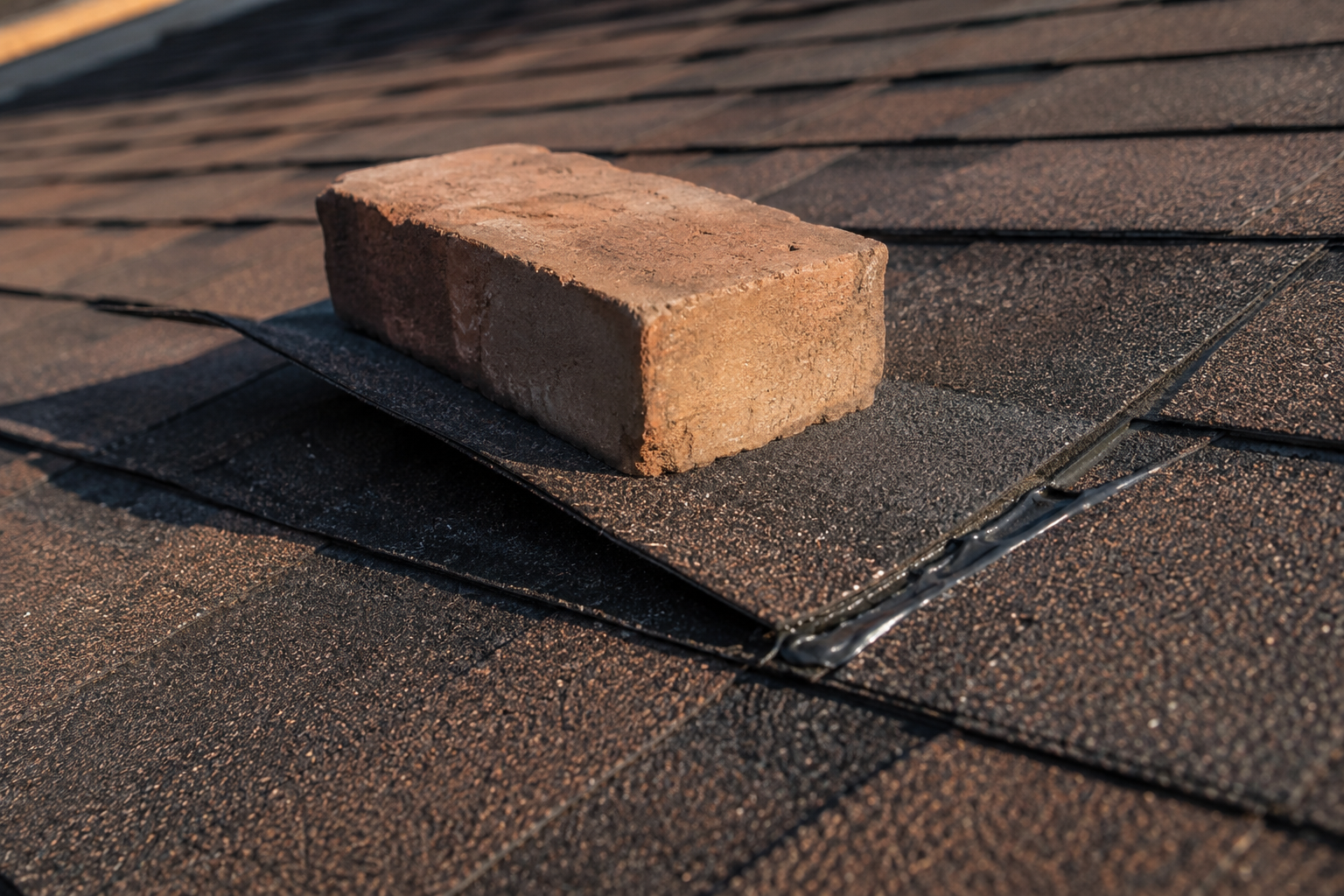
| 4 | Weigh it down with a brick or heavy object |
| 5 | Leave the weight for at least 24 hours to set |
If the shingle is brittle or cracking as you press it, stop. A shingle that has gone hard with age is better replaced than forced, because it will only crack again.
 How to Fix a Cracked or Torn Shingle
A crack does not always mean replacement. If the shingle is otherwise sound, you can seal it in place.
| Step | What to Do |
|---|---|
| 1 | Apply a thick bead of roofing sealant under the crack |
| 2 | Press the shingle down firmly to close the gap |
| 3 | Apply a second bead of sealant on top of the crack |
| 4 | Smooth it with a putty knife |
| 5 | Sprinkle granules from the gutter over the wet sealant |
That last step is a roofer’s trick. Loose granules collected from your gutter blend the repair into the surrounding roof so the fix is nearly invisible.
How to Replace a Missing or Broken Shingle
This is the most involved fix, but it follows a clear order. Do it on a warm day so the surrounding shingles lift without cracking.
| Step | What to Do |
|---|---|
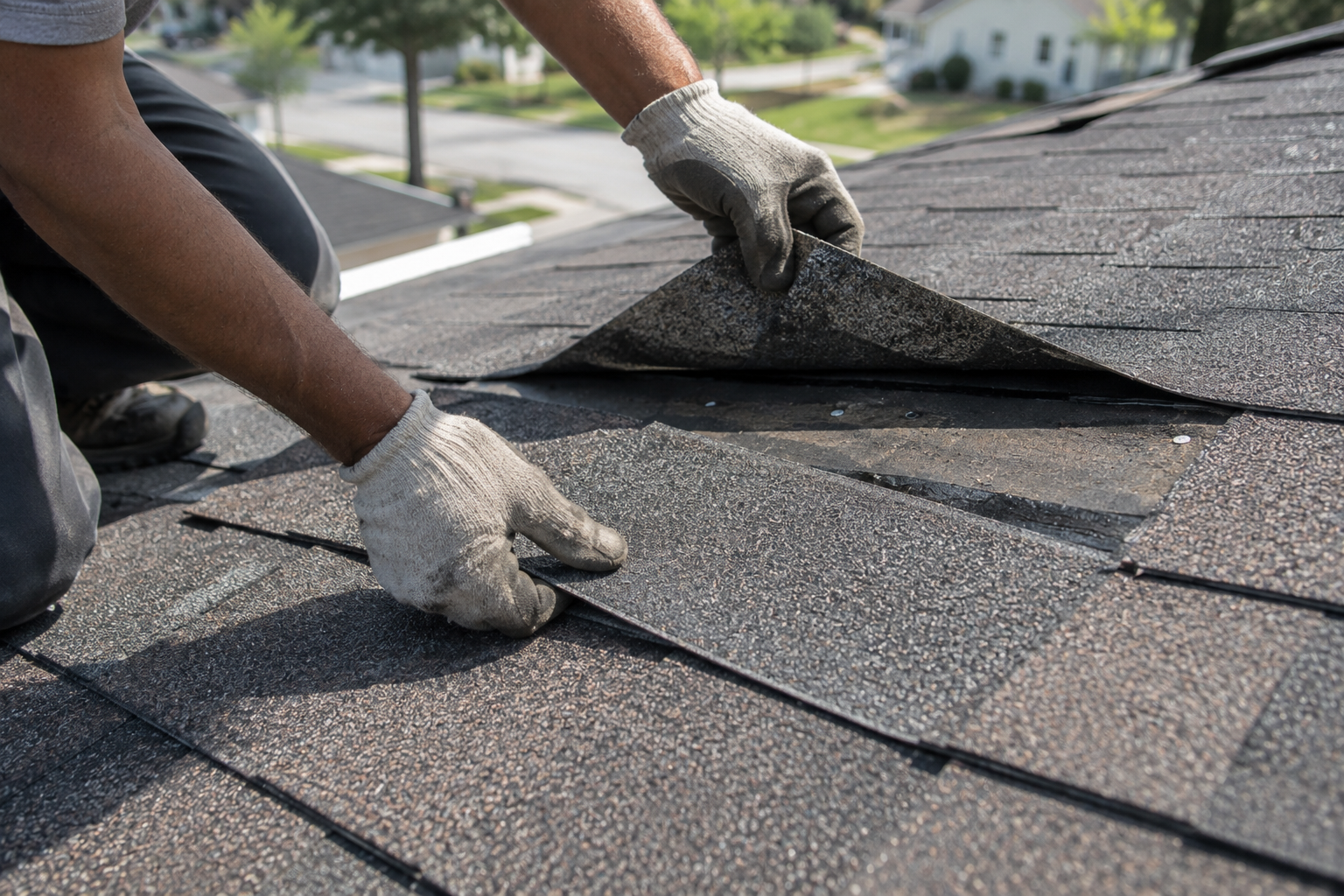
| 1 | Slide a pry bar under the shingle above to break the seal |
| 2 | Lift gently and pull the first row of nails |
| 3 | Lift again to reach and remove the second row of nails |
| 4 | Slide out the old damaged shingle |
| 5 | Slide the new shingle into place, aligned with the others |
| 6 | Nail it down and dab sealant over each nail head |
| 7 | Seal the tabs of the new and surrounding shingles |
Sealing the tabs at the end matters. It recreates the wind-resistant bond that holds the roof together, so your new shingle does not lift in the next storm. Skip it, and the repair fails in the first strong wind.
 Why Cold Weather Makes Shingle Repair Harder
This matters a lot on the prairies, and most guides skip it.
Asphalt shingles get brittle in the cold. Below a few degrees Celsius, they crack when you try to lift or bend them, and roofing sealant does not bond well. That means a repair done in a Calgary winter often fails, and lifting the surrounding shingles can create new damage.
| Condition | Effect on the Repair |
|---|---|
| Warm, dry day | Shingles flexible, sealant bonds well |
| Cold day | Shingles brittle, high risk of cracking |
| Wet or icy | Dangerous and poor sealing, do not attempt |
If a shingle fails in winter and water is getting in, the right move is temporary protection and a call to a roofer, then a proper repair when it warms up.
When to Call a Professional
A quick self-check. If any of these apply, hire a roofer rather than climbing up.
| Situation | Why a Pro |
|---|---|
| Active leak inside the home | Hidden damage likely, needs proper diagnosis |
| Steep or multi-storey roof | Fall risk is too high |
| Widespread damage | Points to a bigger roof problem |
| Damage after a hailstorm | May be an insurance claim, needs documentation |
| You are not fully comfortable | Safety always comes first |
One more point worth money: if the damage came from hail or a storm, do not just patch it. Have it inspected and documented first, because it may be a covered insurance claim, and a DIY patch can complicate that.
Frequently Asked Questions
Can I fix roof shingles myself? Minor repairs like resealing a curled shingle or sealing a small crack are doable for a careful homeowner on a warm, dry day, on a simple, low roof. Steep roofs, active leaks, and widespread damage should go to a professional.
How do you fix a curled shingle? Clean under the curled area, apply roofing sealant, press it flat, and weigh it down with a brick for at least 24 hours so the sealant sets. This works best while the shingle is still flexible.
Do cracked shingles need to be replaced? Not always. If the shingle is otherwise sound, you can seal the crack with roofing cement above and below it, then blend it with gutter granules. Brittle or badly torn shingles are better replaced.
How do I replace a missing shingle? Lift the shingles above, remove the old nails, slide out the damaged shingle, slide in a matching new one, nail it, and seal the nail heads and tabs. Doing it on a warm day keeps the surrounding shingles from cracking.
Can I repair shingles in winter? It is possible but risky. Cold shingles crack easily and sealant does not bond well, so winter repairs often fail. For a winter leak, use temporary protection and have a roofer do a permanent fix when it warms.
How do I know if I need a repair or a new roof? A few damaged shingles on a sound roof is a repair. Widespread curling, cracking, granule loss, or repeated leaks usually means the roof is near the end of its life and replacement is the better value.
Why Trust This Guide
This guide was prepared by the roofing team at Throne Roofing Inc., a licensed and insured roofing contractor serving Calgary, Edmonton, and Saskatchewan. We repair and replace shingles across the prairies through hail, wind, and hard winters, and we would rather help you understand the job than see a small problem become a big one. We are always happy to tell you honestly whether a fix is a simple repair or a sign of something bigger.
Not comfortable going up, or dealing with a leak or storm damage? Reach out to Throne Roofing for a free, no-obligation inspection and a straight answer on repair or replacement.