
Ice and Water Shield: What It Is and Why Your Roof Needs It
Short answer: Ice and water shield is a self-adhering waterproof membrane that sticks directly to your roof deck under the shingles and seals out water in the spots most likely to leak, mainly the eaves, valleys, and around chimneys and vents. In a cold climate like Alberta, it is the main defence against ice dam leaks, and building code requires it along the eaves. It is not installed across the whole roof, just the high-risk areas, paired with regular underlayment everywhere else.
You will never see it once the roof is finished, but it does some of the hardest work protecting your home. Here is exactly what it does, where it goes, what it costs, and how to tell if a contractor is installing it properly.
What Ice and Water Shield Actually Is
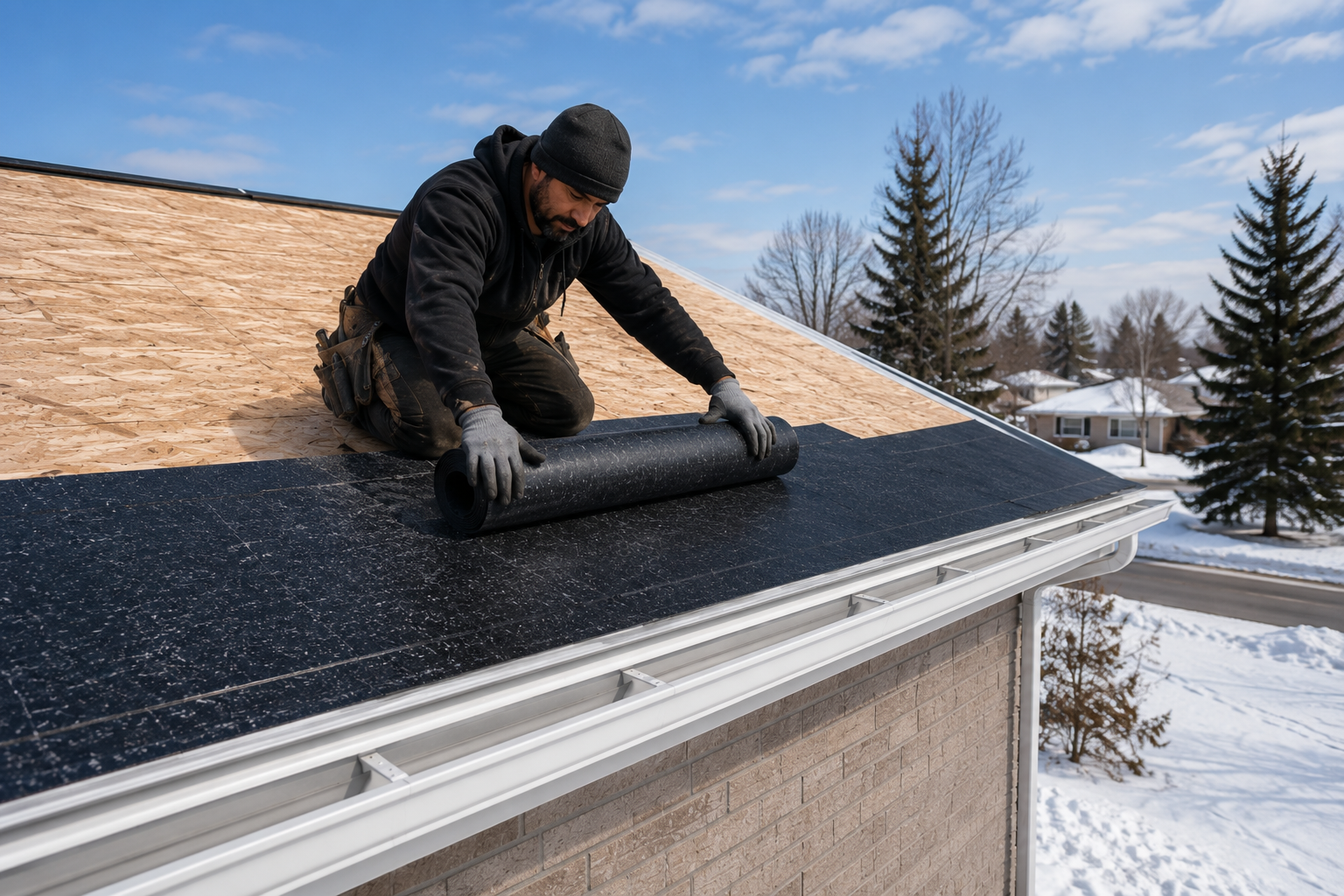
Ice and water shield is a peel-and-stick membrane made from rubberized asphalt, also called modified bitumen. It comes in rolls about three feet wide and bonds directly to the plywood or OSB roof deck.
What makes it special is two things. First, it is fully waterproof, so water cannot pass through it. Second, it self-seals around every nail driven through it during shingle installation, so even the fastener holes stay watertight. Regular felt or synthetic underlayment cannot do that.
Think of your shingles as the raincoat and the ice and water shield as the waterproof layer underneath. If water ever gets past the shingles, this membrane is what stops it from reaching the wood.
Where It Goes on the Roof
It is not spread across the entire roof. It is placed in the specific spots where roofs actually leak. This is the part worth checking in any quote.
| Location | Why It Needs Protection |
|---|---|
| Eaves (bottom edge) | Where ice dams form and back water up |
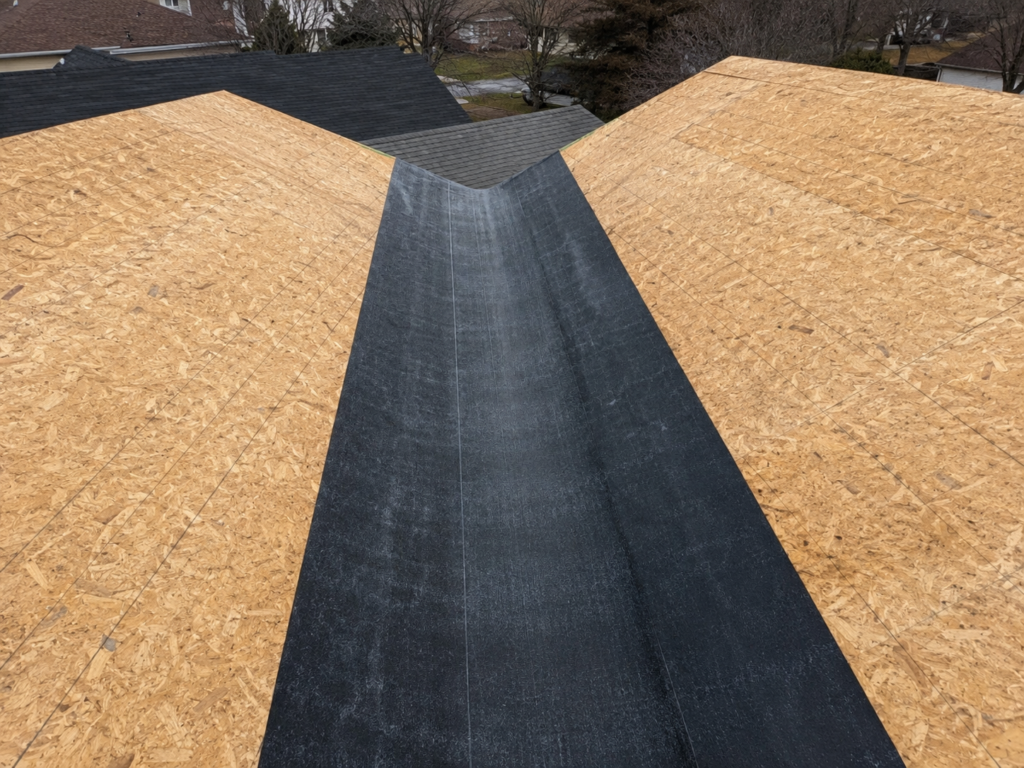
| Valleys | Two slopes meet, water flow concentrates |
| Around chimneys | Common leak point, acts as flashing layer |
| Around skylights and vents | Every penetration is a weak spot |
| Rake edges | Guards against wind-driven rain |
| Low-slope sections | Water drains slowly, more backup risk |
The rest of the roof deck is covered with synthetic underlayment, which is cheaper and lets the roof breathe. This combination is the industry standard: full waterproofing where you need it, breathable coverage everywhere else.
 The Problem It Solves: Ice Dams
This is why the membrane exists, and why it matters so much on the prairies.
In winter, heat escaping into the attic melts snow on the upper part of the roof. That meltwater runs down and refreezes when it reaches the cold overhang at the eave, building up a ridge of ice called an ice dam. Water then pools behind that dam with nowhere to go but sideways and up, under the shingles.
| Stage | What Happens |
|---|---|
| Snow melts on warm upper roof | Water runs down toward the eave |
| Water refreezes at cold eave | Ice dam builds up |
| More water pools behind the dam | Backs up under the shingles |
| Without a membrane | Water soaks into decking and attic |
| With ice and water shield | Water sits on top and drains off safely |
We have torn off roofs where the decking was black with rot in a perfect line right at the eave. Almost every time, the cause was the same: no ice and water shield. In a climate with constant freeze and thaw, this is the single most common and preventable roof failure.
Is It Required by Code in Canada?
Yes. In cold-climate parts of Canada, including Alberta and Saskatchewan, building codes require eave protection along the bottom edge of the roof. The membrane must run from the roof edge to a point past the inside face of the exterior wall, so it covers the area over your heated living space where ice dams cause leaks.
The exact distance and details are set by your local code, so a good roofer sizes it to your specific roof. On steeper roofs and larger overhangs, that often means two overlapping rows to fully meet the requirement. Skipping it is not just a bad idea in this climate, it is a code issue and it can void your shingle warranty.
Types of Ice and Water Shield
Not all rolls are the same. The right type depends on where it is going.
| Type | Best For |
|---|---|
| Granular surface | Eaves and general use, safer to walk on |
| Smooth surface | Low-slope sections, slicker finish |
| High-temperature | Under metal roofs, handles more heat |
Brand matters less than people think. Several manufacturers make excellent products, and most shingle warranties do not require one specific brand. What matters far more is that the membrane is at least 40 mils thick and, above all, that it is installed correctly so it lays flat and bonds tight.
Ice and Water Shield vs Other Underlayments
Homeowners often mix these up. Here is how the three layers compare so you know what you are paying for.
| Underlayment | Waterproof? | Seals Nails? | Typical Use |
|---|---|---|---|
| Felt (tar paper) | Water resistant | No | Old standard, being phased out |
| Synthetic underlayment | Water resistant | No | Field of the roof, breathable |
| Ice and water shield | Fully waterproof | Yes | High-risk areas, eaves and valleys |
The best roof uses both: ice and water shield in the leak-prone zones, synthetic underlayment across the rest. One protects, the other lets the roof breathe.
 What Ice and Water Shield Costs
The good news is that protecting the high-risk areas is affordable, especially compared to what it prevents. These are approximate Canadian ranges, and they vary by roof size and region.
| Item | Approximate Cost (CAD) |
|---|---|
| One roll (about 200 sq ft) | $90 to $150 |
| Rolls needed for a typical roof | 2 to 4 rolls |
| Material for eaves, valleys, penetrations | $180 to $600 |
| Added cost within a full roof replacement | $300 to $800 |
Put that against the alternative. A rotted eave from a missing membrane can turn into a $2,000 to $6,000 deck and interior repair. For a few hundred dollars, ice and water shield prevents the most expensive common leak on a prairie roof. It also lasts 30 to 40 years or more, because it sits protected under the shingles and does not dry out or crack like old felt.
Cold-Weather Installation: The Detail That Gets Missed
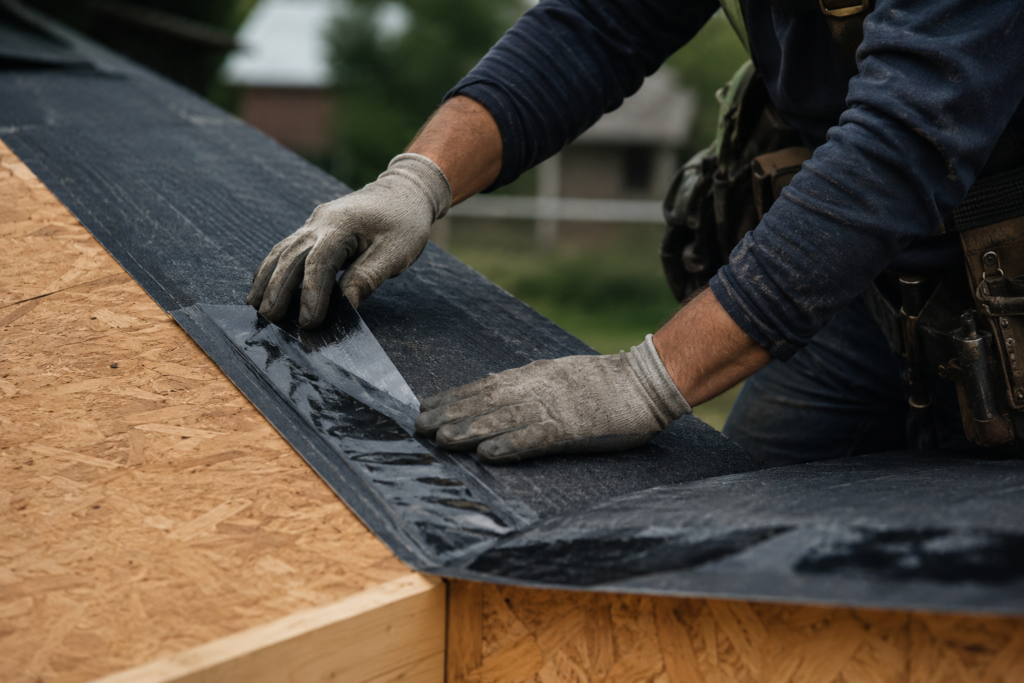
Here is something the product brochures do not stress enough, and it matters most in our climate. The adhesive on most ice and water shield needs warmth to bond. Installed on a cold day, below roughly 4 degrees Celsius, the glue gets sluggish and may not stick properly, leading to bubbles and lifted edges by spring.
| Do | Avoid |
|---|---|
| Install in milder conditions when possible | Applying to a frosty or damp deck |
| Press it firmly to bond fully | Leaving loose or bubbled edges |
| Use correct rows for your overhang | Cutting to one row to save material |
| Overlap seams as the maker specifies | Skipping valleys and penetrations |
A roofer who understands prairie winters plans the timing and technique around this. A rushed crew does not, and the failure shows up months later.
Questions to Ask Your Roofer
You do not need to be an expert. These questions quickly show whether a contractor knows their trade.
- Where exactly will you install ice and water shield, and why?
- How many rows are you using at the eaves?
- How does your plan meet local code for my roof?
- What thickness and type are you using?
- Will skipping it anywhere affect my shingle warranty?
A good roofer will answer these clearly and without hesitation. Vague answers, or a plan that skips the eaves or valleys, is a sign to keep looking.
Frequently Asked Questions
What is ice and water shield used for? It is a waterproof membrane that seals the leak-prone areas of a roof, mainly the eaves, valleys, and around chimneys and vents. Its main job is stopping ice dam leaks in cold climates and blocking wind-driven rain.
Is ice and water shield required by code? In cold-climate regions of Canada, including Alberta and Saskatchewan, yes. Building code requires eave protection along the bottom edge of the roof, and shingle manufacturers usually require it for warranty coverage too.
Do I need it on my whole roof? No, and covering the entire roof is usually a mistake. It acts as a vapour barrier, so used everywhere it can trap moisture if ventilation is poor. The standard is ice and water shield in high-risk areas, synthetic underlayment on the rest.
How much does ice and water shield add to a roof? Material for the high-risk areas usually runs $180 to $600, and as part of a full roof replacement the added cost is around $300 to $800. It is a small fraction of the total for the protection it gives.
How long does it last? When installed correctly under the shingles, it lasts 30 to 40 years or more. Because it is shielded from sunlight and weather, it does not crack or rot the way old felt underlayment does.
Can it be installed in winter? It can, but with care. The adhesive needs warmth to bond, so in cold conditions a good roofer manages the timing and technique to make sure it sticks properly and does not lift later.
Why Trust This Guide
This guide was prepared by the roofing team at Throne Roofing Inc., a licensed and insured roofing contractor serving Calgary, Edmonton, and Saskatchewan. We install ice and water shield on prairie roofs every season, and we have seen firsthand the rotted decking that comes from skipping it. We size it to code for each roof, install it in the right areas, and manage cold-weather bonding so it performs for the life of your roof.
Planning a new roof or worried about ice dams? Reach out to Throne Roofing for a free, no-obligation inspection and a clear written estimate that shows exactly where your protection goes.